


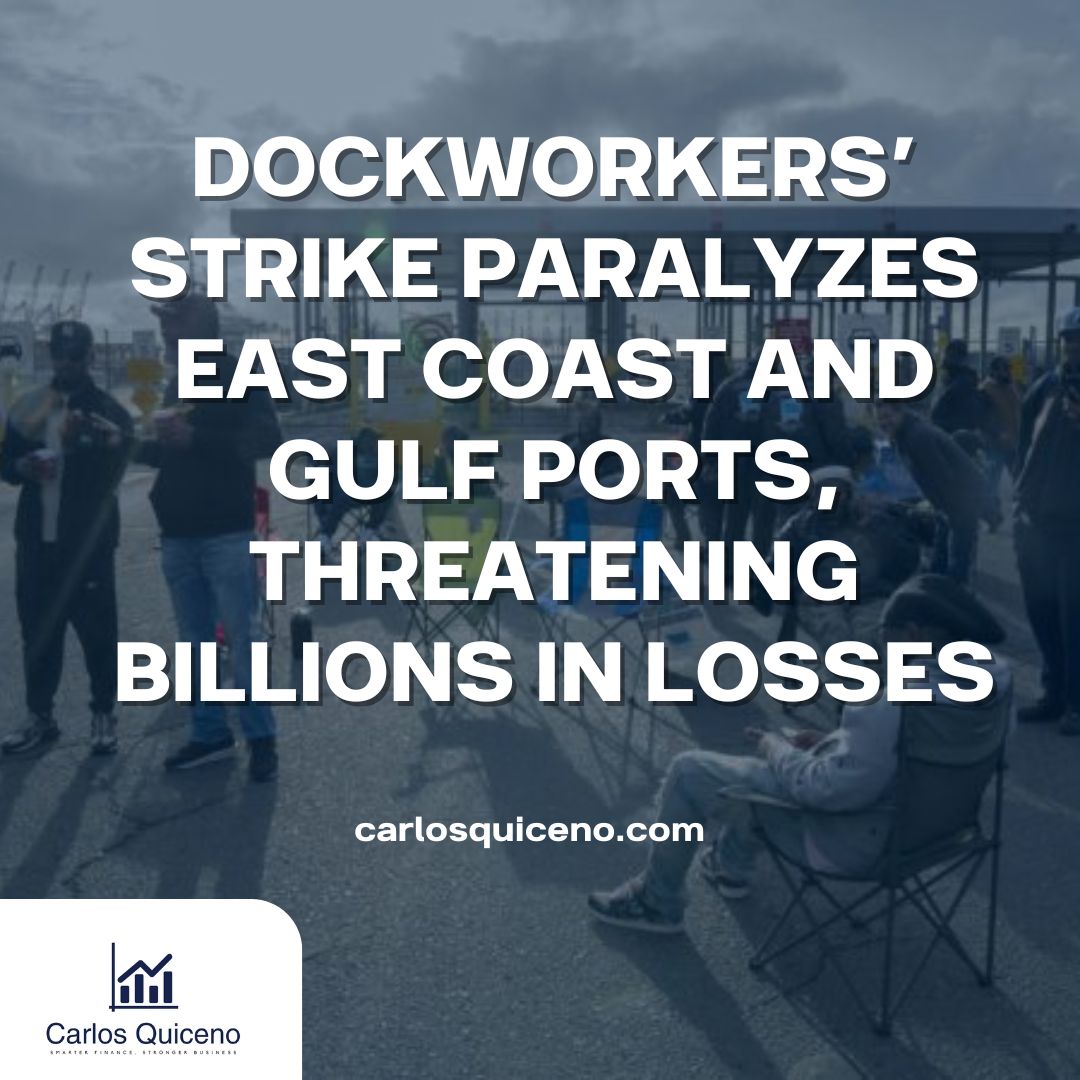
Dockworkers’ Strike Paralyzes East Coast and Gulf Ports, Threatening Billions in Losses
Thousands of dockworkers across the U.S. East Coast and Gulf of Mexico continued their general strike for the second consecutive day, rallying outside major ports. The protest, which began early Tuesday, emerged from the failure of negotiations between the International Longshoremen’s Association (ILA) and the US Maritime Alliance (USMX). Workers are demanding a $5-per-hour wage increase over the next six years and a commitment to halting the automation of port jobs, which threatens their employment.
ILA President Harold Daggett voiced the union’s demands, emphasizing the need for job security in the face of advancing automation. The ILA seeks a “watertight” agreement that ensures no further automation or semi-automation in their roles, alongside wage increases.
In recent discussions, the USMX proposed a 50% wage hike and requested an extension of the current contract. Despite the exchange of offers, no final agreement has been reached, with both sides hoping for a resolution.
The strike has now involved 45,000 dockworkers and threatens significant economic disruption, costing an estimated $2 billion daily. Ports in key locations, including Elizabeth/Newark, Houston, Miami, and Baltimore, have been heavily impacted, with nearly half of the country’s maritime trade passing through these terminals. Baltimore, a crucial hub for coal exports and vehicle shipping, has seen particularly intense protests. Workers, holding signs that read “Machines don’t feed families: Support ILA workers,” voiced their frustration at automation’s encroachment on jobs.
Protesters invoked the memory of the 1977 dockworkers’ strike, emphasizing the historical significance of their movement and their determination to safeguard their livelihood against modern technological threats.
This strike highlights two of the most pressing issues in modern labor relations: the rise of automation and the demand for fair wages. The workers’ demand to halt automation reflects growing fears across many industries that technology could replace human labor, particularly in manual roles like dock work. The call for a $5 hourly wage increase indicates rising frustration over wages, especially in the context of inflation and the increasing cost of living.
USMX’s offer of a 50% wage increase appears substantial, but the core issue for workers seems to lie in job security and protection against automation. The protests, which already involve tens of thousands of workers, underline the severity of the conflict.
Economically, the strike’s impact is immense. With key ports paralyzed, the disruption of the supply chain could have far-reaching consequences for U.S. trade and industries reliant on imports and exports. The estimated $2 billion daily loss could escalate if the strike persists, adding pressure on both parties to resolve the dispute. President Joe Biden’s comment, labeling the situation as a potential “man-made disaster,” underscores the broader implications for the economy if the standoff continues.
This strike serves as a critical test of how labor unions and employers will navigate the challenges of technological advancement while balancing workers’ rights and financial viability.