


Understanding Leveraged Beta in Risk Assessment
In the world of finance, risk assessment is vital for making informed investment decisions and ensuring long-term business success. One of the key metrics used in risk assessment is Leveraged Beta, also known as Beta. At Carlos Quiceno Financial Services, we emphasize the importance of understanding and utilizing Leveraged Beta to accurately assess the risk associated with using borrowed capital in your business operations.
What is Leveraged Beta?
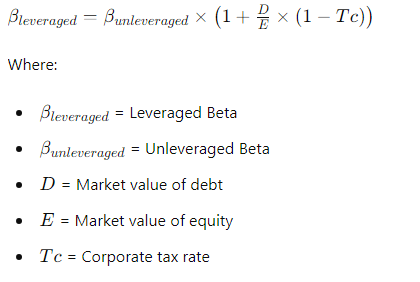
Leveraged Beta, or Beta, measures the volatility of a company’s stock relative to the market, taking into account the company’s debt levels. It reflects the risk associated with the company’s use of leverage (debt) to finance its operations. The formula for calculating Leveraged Beta is as follows:
Importance of Leveraged Beta
- Risk Assessment: Leveraged Beta provides insights into the additional risk a company assumes due to its debt. A higher Leveraged Beta indicates higher risk, helping investors and businesses make informed decisions about financing strategies.
- Investment Decisions: Understanding Leveraged Beta aids in evaluating the risk-adjusted return on investments. Investors can compare the Leveraged Beta of different companies to assess their relative risk profiles.
- Capital Structure Optimization: By analyzing Leveraged Beta, companies can determine the optimal mix of debt and equity in their capital structure to balance risk and return.
- Performance Measurement: Leveraged Beta is used in the Capital Asset Pricing Model (CAPM) to calculate the expected return on equity. This helps in assessing whether a company is generating returns commensurate with its risk level.
Our Leveraged Beta Analysis Process
At Carlos Quiceno Financial Services, we follow a systematic approach to calculate and analyze Leveraged Beta, ensuring accurate risk assessment:
- Data Collection: We gather comprehensive financial data, including market values of equity and debt, and corporate tax rates.
- Unleveraged Beta Calculation: We estimate the unleveraged beta by analyzing the company’s industry and comparing it with similar companies with no debt.
- Debt and Equity Weights: We determine the proportions of debt and equity in the company’s capital structure.
- Leveraged Beta Calculation: We use the Leveraged Beta formula to calculate the risk associated with the company’s leveraged operations.
Conclusion
Leveraged Beta is an essential metric for assessing the risk associated with using borrowed capital. At Carlos Quiceno Financial Services, we help businesses navigate the complexities of Leveraged Beta to make informed financial decisions, optimize capital structures, and achieve long-term success.
Contact us today to learn more about our Leveraged Beta analysis services and how we can help your business effectively manage risk and maximize value.